The world is requiring more renewable sources of energy to meet its needs. With decades of expertise in feedstock, bioprocessing and biofuel production, DuPont has answered the call with a fully integrated process that converts biomass to cellulosic ethanol.
This farm-to-fuel system is applied in our Nevada, Iowa biorefinery, which will produce 30 million gallons of fuel-grade ethanol a year, with a licensing model that can be applied anywhere in the world. Learn more about how DuPont is reforming energy in Iowa, and around the globe:
http://ib-promo.dupont.com/reformenergy/
Summertime means vacation time – but, with unpredictable weather patterns, fluctuating gas prices and increasing costs, Americans nationwide are concerned about getting away. Our national travel expert has some great trips on how to survive summer travel – he/she will cover everything from how to get the best deals to planning a vacation suitable for the whole family.
Some of the unique and useful tips Amy can offer are:
• Travel trends: Travelling to destinations during their peak seasons can drive prices up. Visiting during off-peak times can help save money and you’ll have easier access to activities than at busier times of the year.
• Get organized: Planning a fun and successful trip means, setting a budget, researching, and booking early! Shop around to find transportation and accommodations that suit your needs and your budget.
• Get Your Ride Ready: If you’re hitting the open road, make sure any maintenance you need to have done on your vehicle is taken care of including checking your vital fluids, tires, and headlights and break lights.
• First Aid Kit: Make a little room in your luggage for a travel first aid kit. It won’t cost much, and it won’t take up much space but it can certainly come in handy.
Silvercar, an Austin-based technology company, today opened its service to travelers visiting Dallas/Fort Worth International Airport (DFW). The innovative airport-based rental fleet comprises only one make and model of vehicle: the 2013 Audi A4, in silver. Mobile integration is key to the Silvercar experience, as the entire customer journey can be managed from a smartphone. This means no waiting in lines or at counters — ever — when renting with Silvercar.
To view Multimedia News Release, go to http://www.multivu.com/mnr/59940-silvercar-mobile-integrated-rental-service-dallas-fort-worth-dfw-airport
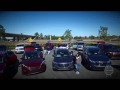
The vehicles deemed the 16 Best Family Cars of 2016 were announced today by Kelley Blue Book, www.kbb.com, the only vehicle valuation and information source trusted and relied upon by both consumers and the automotive industry. After extensive testing and evaluation, with a keen focus on safety, comfort, convenience, spaciousness for both passengers and cargo, and fit of various rear-facing and forward-facing child safety car seats, the KBB.com expert editors recommend their choices for a diverse group of vehicles that best meet the needs of today’s modern families.
“For two weeks’ time we drove, lived-with, folded-down-seats-of, paired-phones-to and installed-baby-seats-in each and every one of the contenders,” said Jack R. Nerad, executive editorial director and executive market analyst of Kelley Blue Book’s KBB.com. “We loaded cargo, contorted ourselves into third rows, watched movies on rear-seat screens, toted rowing teams to marinas – in short, we did everything that you and your family might do with a vehicle day-to-day. And we did all this with a certain sense of what a family needs and wants, since many of our testers are simultaneously parents of kids ranging from mid-twenties to newborn. So this wasn’t just a cursory exercise, but instead it drew heavily upon our family-car experiences, needs and wants.”
To view the multimedia release go to:
http://www.multivu.com/players/English/7748351-kelley-blue-book-best-family-cars-2016/
Continuing a multi-year string of quality and reliability awards and accolades, J.D. Power’s 2017 Initial Quality Study (IQS) today recognized Kia Motors as the highest-ranking nameplate in the United States for the second year in a row. Kia’s improvement to 72 problems per 100 vehicles marks the best nameplate performance within the last 20 years of the study, driven by five segment awards – the most of any nameplate — for the Soul (Compact Multi-Purpose Vehicle), Forte (Compact Car), Cadenza (Large Car), Niro (Small SUV) and Sorento (Midsize SUV). The Kia Soul took home an IQS award for the third consecutive year while Kia’s two newest models, Cadenza and Niro, were outstanding performers in their first model year, with the Kia Cadenza earning the top score among all models ranked in the study. Together with the Optima and Sportage , each of the seven award eligible Kia models included in the 2017 IQS study finished first or second in their respective categories.
To view the multimedia release go to:
https://www.multivu.com/players/English/8016954-kia-j-d-power-initial-quality-study/
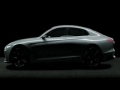
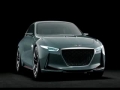
GENESIS has unveiled its striking ‘New York Concept’ luxury sports sedan at the New York International Auto Show. The New York Concept hints at future GENESIS design direction with its expressive and refined ‘Athletic Elegance,’ first seen in the Vision G concept and in production form with the GENESIS G90 premium luxury sedan.
Acknowledging the GENESIS brand’s sporty and agile nature, the hybrid concept generates 245ps and 36.0 kgf.m of torque from its 2.0 GDi powertrain coupled with an 8-speed automatic transmission. The advanced technological features and precise design language of the concept emphasize key aspects of Korean culture, while elevating the value and perception of the GENESIS brand.
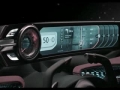
The exterior of the New York Concept presents an elegant interpretation of a luxurious performance vehicle, defined by well-balanced proportions and refined surface treatments. Inside, the concept car combines advanced technology with absolute luxury, contrasting innovative electronics against finely-crafted materials.
To view the multimedia release go to:
http://www.multivu.com/players/English/7506054-hyundai-genesis-hybrid-sports-sedan-nyias/
FC Barcelona has organized a talk named Crossing Bridges, hosted by Aperture Foundation in New York. This talk was part of the promotional activities of the FCBARCELONA PHOTO AWARDS, which is the first one in its nature, initiated by a sports club and aiming at photographs that will best depict the positive values of sports for the society.
The Awards expect participation of artists who use photography as a vehicle for artistic expression, professional photographers, as well as photojournalists. Rather than professional sports photography, The Jury will prioritize the submissions that show sports as it is practiced in daily life everywhere in the world.
To view the multimedia release go to:
http://www.multivu.com/players/uk/7994851-fcbarcelona-photo-awards-new-york/
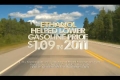
On American roads ethanol is saving consumers money at the pump and improving overall engine performance. In 2011, the use of ethanol helped reduce the average price of gas by $1.09 saving American families $1,200 over the year. Additionally, as a high octane additive, ethanol helps car engines run cleaner and reduces engine knock and pinging.
LEARN MORE: http://www.mnbiofuels.org/
Car Vehicle is Seen in The Nevada Fake Moon Bay.
This Video As You See & Hear it, From NASA's Public Domain Movie:
Apollo 14: Mission to Fra Mauro (1971)
Music- Symphony No.7, In C Major, 'Le Midi': Menuetto
ALL NASA FOOTAGE USED IN THIS VIDEO IS PUBLIC DOMAIN. THE USE OF ANY COPYRIGHTED MATERIAL IS USED UNDER THE GUIDELINES OF "FAIR USE" IN TITLE 17 § 107 OF THE UNITED STATES CODE. SUCH MATERIAL REMAINS THE COPYRIGHT OF THE ORIGINAL HOLDER AND IS USED HERE FOR THE PURPOSES OF EDUCATION, COMPARISON, AND CRITICISM ONLY. NO INFRINGEMENT OF COPYRIGHT IS INTENDED.
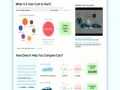
The 2014 model-year vehicles and brands (in both non-luxury and luxury categories) with the lowest projected ownership costs were announced today by Kelley Blue Book www.kbb.com, the leading provider of new and used car information. These awards are based on Kelley Blue Book’s 5-Year Cost to Own data for new cars for the initial five-year ownership period.
While depreciation (or loss of value) and fuel costs may be the greatest expense incurred in owning a vehicle, there are other factors that can have a significant impact on a consumer’s pocketbook. Available on Kelley Blue Book’s KBB.com, 5-Year Cost to Own information takes into consideration depreciation, expected fuel costs, finance and insurance fees, maintenance and repair costs, and state fees for new models.
To view the Multimedia News Release, go to http://www.multivu.com/mnr/65344-kelley-blue-book-kbb-announces-2014-5-cost-to-own-award-winners