Quest Diagnostics (NYSE: DGX), the world’s leading provider of diagnostic information services, commemorated its 50-year anniversary by awarding $150,000 in total grants to three organizations that share its goal to improve healthcare: The American Red Cross, the National Ovarian Cancer Coalition and Autism Speaks.
At a ceremony at the company’s flagship clinical laboratory in Teterboro, NJ, the company’s chairman, president and CEO Steve Rusckowski presented Health In Your Hands grants of $50,000 to representatives from each organization. Paul Brown, M.D., founder and former CEO of Quest’s predecessor company Metropolitan Pathology Laboratory, Inc. or MetPath, established in April, 1967, was also recognized at the event.
To view the multimedia release go to:
https://www.multivu.com/players/English/8080751-quest-diagnostics-50th-anniversary/
This Earth Day, sustainability pioneer Fetzer Vineyards announces completion of its revolutionary BIDA® wastewater treatment system, which relies on billions of worms to clean up the winery’s process water. The California vintner’s worms — which work in tandem with microbes to digest contaminants in greywater — are at the heart of a natural system from BioFiltro that uses 85% less energy to clean winery water, regenerating up to 17 million gallons annually for re-use in vineyards and landscaping. The new system is one of a number of Earth-friendly innovations Fetzer Vineyards has recently introduced in an effort to preserve vital resources and find ever-more-efficient ways to put planet conservation on an even playing field with premium winemaking.
To view the multimedia release go to:
https://www.multivu.com/players/English/7990252-fetzer-vineyards-worms-at-work-bida-system/
Starting this May, homeowners in Stockholm can access pay-per-use power tools for the garden, eliminating the need to maintain and store hedge trimmers, chainsaws and other tools that are used less frequently. The project is a pilot, and part of Husqvarna’s commitment to explore innovative and sustainable solutions for taking care of gardens and green spaces.
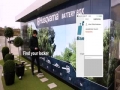
The Husqvarna Battery Box, is a "smart", 8x3 meter, unattended container with 30 electronic lockers that store battery powered garden care products. Via an iPhone app, homeowners can reserve tools, get instructions, pay, and open the locker to pick up their pre-booked power tool. The "box" will be placed at Bromma Blocks, a shopping center 15 min west of Stockholm city. Renting a garden care product will cost 350 SEK a day (approx 35 Euros or 38 USD).
To view the multimedia release go to:
https://www.multivu.com/players/uk/8087051-husqvarna-pay-per-use-power-tools/